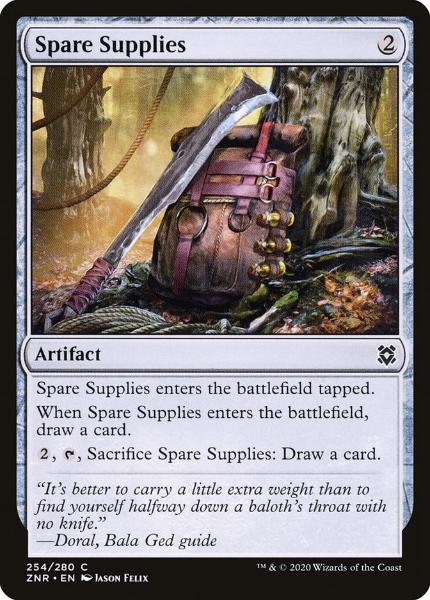
Here: I'm going to teach you, right now, how to appropriately assess a card for its worth - The process is simple. I do it every time I analyze the state of the game. With this particular card, the factors are very obvious: Mana spent, and results granted. Ignore factors like "tapping", or "enters tapped", because the only function this card has is (mostly) unrelated to random encounters in the gameplay. All it does is draw you cards. What I want to look at is Cost/Benefit. The card ends up costing you nothing but 4 generic mana, and yields you 2 cards, supposedly. What you might not notice, is that the card ITSELF would replace one of those cards, and you're really only getting one EXTRA card out of it. So, Cost/Benefit = (4) mana / (1) card. Here's the problem I'm having with that: Why include such a card in your deck? If you were potentially drawing an extra 2 or 3 cards for the instance of this card occurring in your hand, I could see it, but only 1 extra card doesn't do much for your efficiency. Yes, it IS only a "common" card, and we can't expect much from THEM - But, honestly, how likely are you to use this card in a competitive, Constructed deck (or even a Limited one?) I think the idea is fine. But, I also think that there could have been a little bit more to it than "work out an extra card by strategically spending extra mana". Entertain this notion: Keep the opening part the same, but instead of paying (2) and sacrificing to draw (1), the card could add counters to itself. Upon the 3rd payment, it is sacrificed and you draw (3). In this scenario, the Cost/Benefit is (8) mana for (3) cards (not including the "replacement" card). It would be especially relevant in Limited play, because players would have a source of cards to eventually tap, while their extra mana likely would have gone unspent. It adds efficiency to the gameplay, making things more dynamic and interesting. With the current, dead card that it is, it is rendered only a flimsy choice to include it in your deck (along with all these other, such "dead-end" sort of cards). The only real draw-back in my design would be the fact that you have to wait for the cards, and meanwhile, your artifact would be vulnerable to destruction. But! Notice that if you allow your opponent to target this artifact and destroy it, you've likely used their artifact destruction "here" rather an "there", lending you the opportunity to lay down something more potent, and evade ITS destruction. This would be the sort of strategic dynamic that I am after. The current game forces players to place "all their eggs in one basket" too often. Strategically protecting your investments, while simultaneously granting yourself a potential of access to more possibilities (or "chances"), seems like a nice gambit to me. I'd like to try that sometime. |